7 B2B Lead Generation Best Practices for Early-Stage SaaS
You're running Google Ads, testing LinkedIn, publishing content when the team gets a spare afternoon, and trying to make sense of a CRM that still feels half-built. Leads arrive in small bursts. Some look promising, some vanish, and after a few weeks nobody can say which channel drove the opportunity or why sales followed up on one form fill but ignored another.
That's the normal early-stage SaaS mess. The problem usually isn't effort. It's fragmentation. Paid media sits in one tool, attribution sits in another, forms sit on landing pages that don't sync cleanly, and nurture emails go out without any clear tie back to pipeline quality. You end up buying clicks, collecting emails, and still guessing.
The best B2B lead generation best practices work as a system, not a bag of isolated tactics. Content should feed retargeting. LinkedIn should feed CRM workflows. Landing pages should reflect ad intent. Lead scoring should shape who sales contacts first. Attribution should tell you where to push budget next.
This guide pulls those pieces together into seven practical plays for early-stage SaaS teams. No theory-heavy detours. Just what tends to work, what breaks, and how to set up a lead generation engine that doesn't depend on luck.
Table of Contents
1. Account-Based Marketing with Integrated CRM Orchestration
3. Content-Driven Lead Magnets and SEO-Powered Organic Demand
1. Account-Based Marketing with Integrated CRM Orchestration
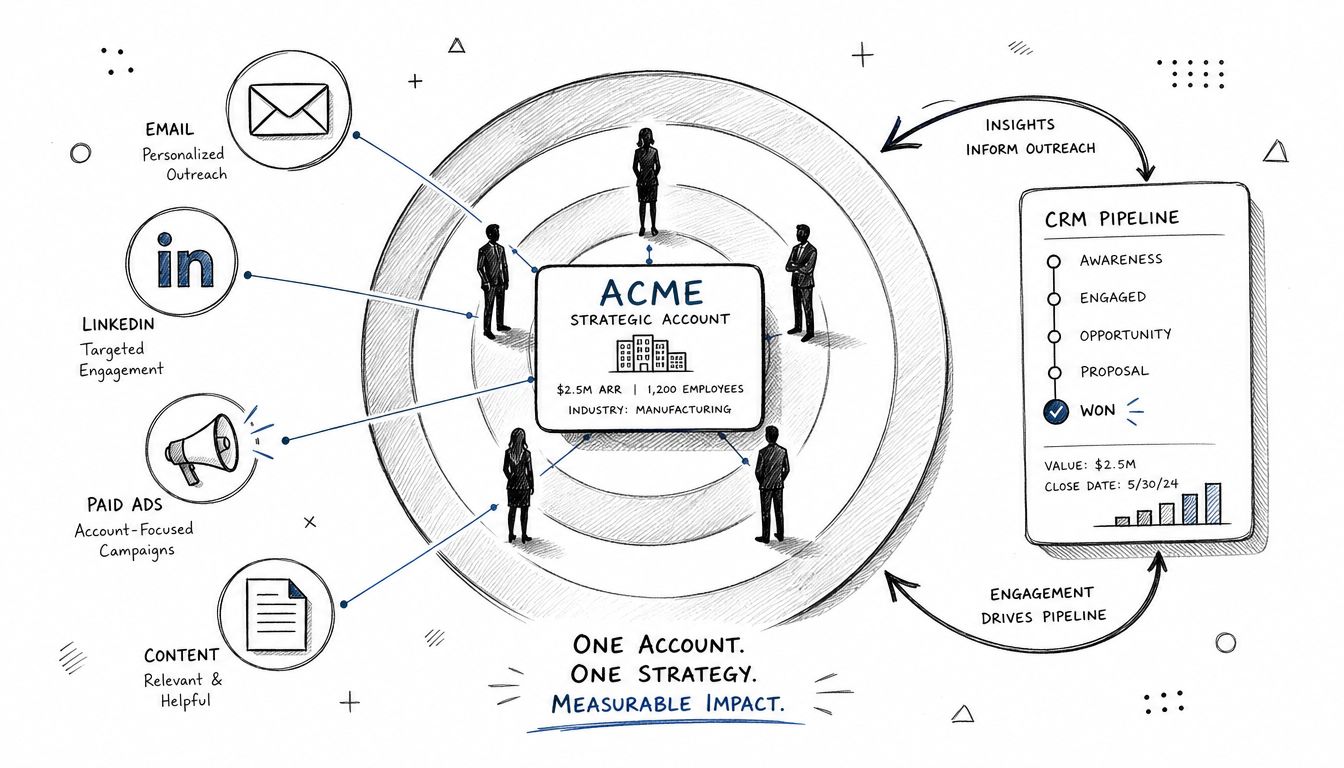
ABM works best when you stop pretending your startup can target everyone. Pick a small set of accounts that fit your product, sales motion, and contract potential. For an early-stage SaaS company, that usually means a tight list, clear buying roles, and one CRM that acts as the system of record.
Start Narrow and Build the Plumbing First
If you're using HubSpot or Pipedrive, create account-level properties before launching campaigns. You need fields for target account status, buying committee role, lifecycle stage, latest meaningful touch, and source detail from UTM capture. Without that structure, “ABM” turns into sales reps manually guessing who engaged.
Terminus, Demandbase, 6sense, and LinkedIn Account Targeting all support this style of account-focused execution. The mistake most startups make is buying the playbook before they've earned the complexity. Start with a shortlist of target companies, then sync those audiences into LinkedIn Ads and Google Ads so paid and sales outreach hit the same people.
Practical rule: If marketing and sales can't open the same account record and see the same engagement history, you don't have ABM. You have parallel activity.
What Good ABM Looks Like in a Startup
A sensible motion looks like this: a target account sees LinkedIn ads tied to a specific pain point, clicks to a role-specific page, downloads a useful asset, enters a short nurture, then gets routed to sales with context. That context matters more than volume. A rep who knows the prospect read an integration page and a migration guide can send a better email than a rep who only sees “ebook lead.”
Use role-specific messaging for the CFO, operator, and technical evaluator. One generic value prop usually misses all three. If your scoring model is weak, fix that before scaling outreach. A practical primer on predictive lead scoring that stops feeding your sales team junk will save you from pushing low-signal contacts into the pipeline.
A few habits keep this clean:
Map the decision-making unit: Identify the likely champion, budget owner, and technical reviewer for each account.
Keep channels coordinated: Run paid, retargeting, email, and sales outreach against the same account list.
Track at the account level: Individual leads matter, but pipeline usually moves when multiple people from one company engage.
2. Intent Data and Behavior-Based Targeting
A startup launches paid search, runs LinkedIn ads, publishes a comparison page, and books a few demo requests. Sales still complains that the leads are mixed quality. The usual problem is not channel choice. It is treating every conversion the same instead of reading buying behavior across the whole system.
Intent helps you decide who deserves attention now. Firmographics tell you whether an account fits your ICP. Behavior shows whether that account is entering an active buying cycle. Early-stage SaaS teams need both, tied back to CRM stages, nurture logic, and retargeting audiences, or they end up paying to reacquire people who were already showing strong sales signals.
Signals Beat Static Lists
Useful intent signals usually come from your own stack first: repeat pricing-page visits, product page depth, integration page views, demo requests, high-intent email clicks, webinar attendance, and return visits from the same company. Third-party intent tools can add coverage, but first-party behavior is usually more actionable because it maps directly to your funnel and your messaging.
Many startup teams frequently overbuild. They buy expensive intent data before they have clean UTMs, CRM properties, or lifecycle stages. That creates noise, not clarity. Start with the events you can trust, score them consistently, and make sure sales can see the context inside the CRM, not buried in three disconnected tools.
A simple model works better than an impressive one nobody uses.
How to Use Intent Without Overcomplicating It
Build scoring in two buckets: fit and behavior. Fit covers company size, industry, tech stack, geography, and use case alignment. Behavior covers actions that suggest evaluation, such as revisiting pricing, reading migration content, or viewing multiple bottom-funnel pages in a short window.
Then connect those scores to action:
Low fit, high behavior: keep them in nurture or route selectively if the use case is still plausible.
High fit, low behavior: keep warming them through paid retargeting, email, and useful content.
High fit, high behavior: alert sales fast and include the exact pages, assets, and timestamps.
Low fit, low behavior: suppress or deprioritize so the team does not waste follow-up capacity.
The handoff matters. If a rep gets “MQL from ebook,” response quality drops. If the rep sees “VP Operations from a 50-person SaaS company visited pricing twice, read the integration docs, and clicked the migration checklist,” outreach gets sharper.
For early-stage teams, I usually recommend three practical rules:
Use first-party intent before buying more data: product pages, pricing, demo flows, comparison pages, and integration content usually beat broad external signals.
Score spikes in activity, not just total activity: ten visits in two days often mean more than twenty visits spread across three months.
Push intent back into channel execution: build retargeting audiences, sales sequences, and CRM nurtures based on behavior, not just source.
Set response windows: high-intent accounts should trigger same-day follow-up, not sit in a queue until next week.
Intent works best when it shapes the whole motion. Paid channels create awareness, organic content captures research demand, CRO turns that traffic into identifiable leads, attribution shows which touches mattered, and CRM automation keeps warm accounts moving until sales timing is right. If you need a content plan that supports those intent signals, this guide to content marketing for startups is a strong next step.
3. Content-Driven Lead Magnets and SEO-Powered Organic Demand
Paid channels are useful, but they rent attention. Content builds equity. For early-stage SaaS, that matters because you probably can't outspend bigger competitors, but you can out-teach them in a niche.
Organic Demand Is Slow Until It Isn't
Content marketing is one of the clearest long-game moves in B2B. Companies with active blogs generate 13 times more leads than those without, and content marketing produces three times more leads at a 62% lower cost than traditional outbound channels, according to Martal's roundup of B2B lead generation statistics. That same source also notes that 59% of B2B marketers identify search visibility as the channel with the largest impact on lead generation goals.
That doesn't mean “publish thought leadership” and hope. It means building pages that answer commercial questions buyers already have. Comparison pages, migration guides, use-case pages, implementation articles, and integration content tend to pull in stronger intent than broad opinion pieces.
What to Publish First
Start with content that supports both acquisition and sales. A product marketer, founder, or AE should be able to send the piece during a live deal. If they wouldn't share it with a real prospect, it probably won't drive qualified leads either.
HubSpot, Databox, Airtable, Figma, and Slack all show versions of this playbook. They publish resources that match buyer questions, then route interested visitors into email capture, trial, demo, or nurture flows. For startup teams building this muscle, a grounded approach to content marketing for startups is more useful than trying to mimic a giant media library.
A practical publishing order:
Write high-intent pages first: Comparison, alternatives, implementation, and ROI-adjacent topics usually beat broad awareness posts.
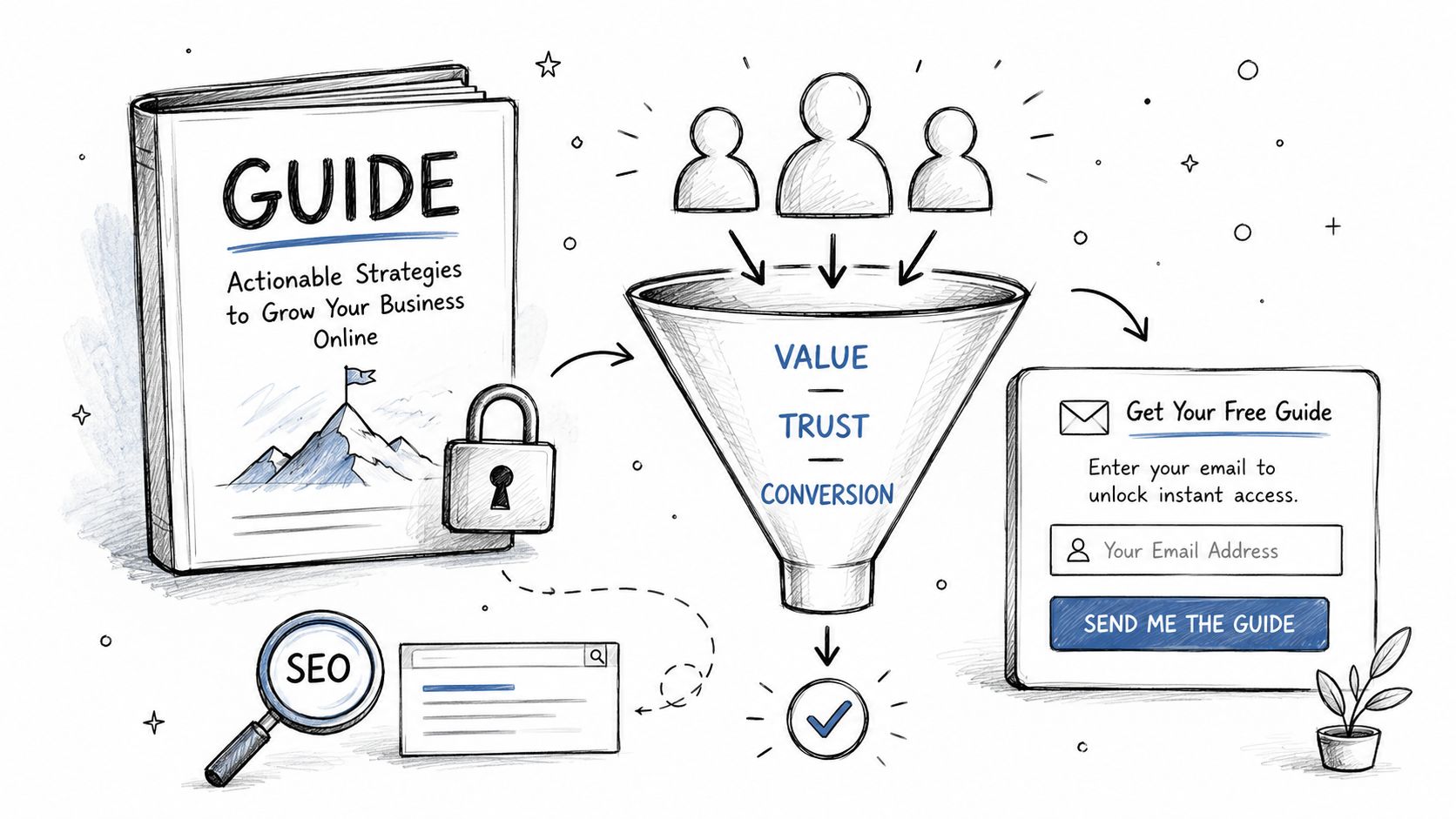
Gate selectively: Keep top-of-funnel education open. Reserve gating for deeper assets with real buying value.
Repurpose aggressively: A strong guide can become a LinkedIn post series, webinar topic, sales follow-up asset, and retargeting hook.
The content that drives pipeline usually isn't your cleverest article. It's the one that answers the uncomfortable question a buyer was already typing into search.
4. LinkedIn Paid Ads and Organic Social Selling
If you sell to professionals, LinkedIn is usually too important to treat as an afterthought. Many teams post occasionally, run one test campaign, complain about cost, and quit before they learn anything useful.
Why LinkedIn Deserves a Real Budget
LinkedIn is used by 94% of B2B marketers for sales and lead generation, and it accounts for 80% of all B2B social media leads, according to Warmly's B2B lead generation statistics. That same source notes that website organic and referral traffic generates 16% of marketing qualified leads, while third-party in-person events contribute 11% and paid social more broadly contributes 9%.
That matters for a startup because LinkedIn gives you direct access to role, seniority, company, and industry targeting without relying on broad proxies. Sponsored Content, Conversation Ads, and Lead Gen Forms can all work, but only if the offer matches the stage of awareness. Don't run “Book a Demo” to a cold audience that has never heard of you and expect magic.
The Organic Layer Most Teams Skip
The strongest LinkedIn programs combine company ads with human distribution. Founders, sales leaders, and subject-matter experts should post useful observations, customer lessons, and opinionated takes from the field. Then paid campaigns can amplify what's already resonating.
Collaborative content is especially interesting right now. A Reddit discussion on underrated B2B lead gen tactics cites 2025 data claiming co-hosted webinars and guest swaps generate 3x higher engagement from niche decision-makers, and that 52% of B2B buyers prefer partner-led content over vendor-led pitches. The same discussion points to creator-led partnerships plus LinkedIn conversation ads, DMs, and email driving 2.8x more signups than traditional ad forms alone.
Use that insight carefully. It doesn't mean every SaaS brand needs an influencer strategy. It means trusted distribution often beats polished self-promotion.
Use native lead capture when friction matters: LinkedIn Lead Gen Forms can make sense for webinar, guide, or audit offers.
Support reps with content: Give sales a small library of posts, customer proof, and useful follow-up assets.
Retarget by engagement level: Someone who watched a founder video deserves a different next touch than a cold clicker.
5. Landing Page Optimization and Conversion Rate Testing
Most lead gen problems get blamed on channels. A lot of them are landing page problems.
Fix Message Match Before Fancy Design
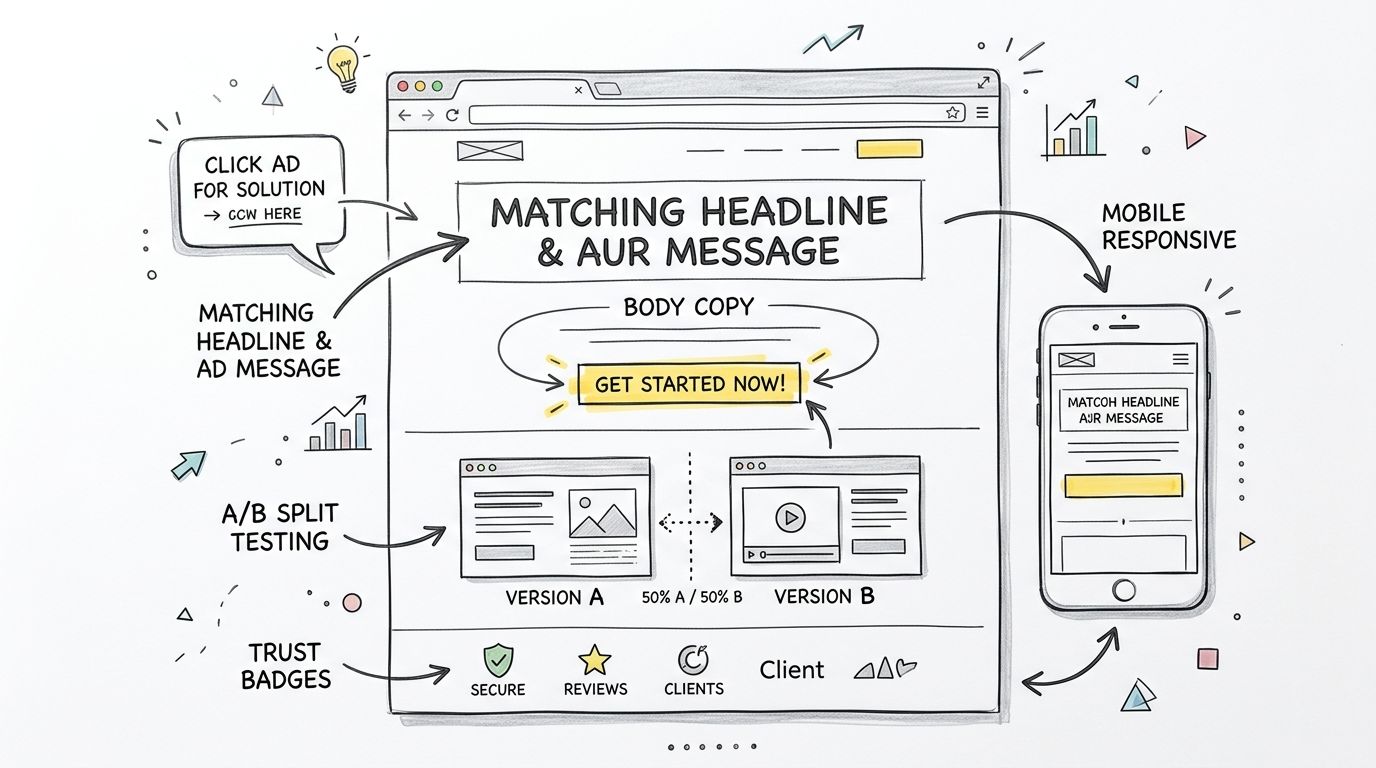
When a prospect clicks an ad about reducing onboarding friction and lands on a generic “all-in-one platform” page, the session is already in trouble. Message match is one of the simplest B2B lead generation best practices, and it gets ignored because teams want to redesign pages instead of aligning copy.
A startup landing page should answer four things quickly: who this is for, what problem it solves, what proof supports the claim, and what the next action is. That's true whether you build in Webflow, Unbounce, HubSpot, or custom code. Don't stuff the page with every feature your product team loves.
CRO usually improves when you remove things, not when you add more widgets.
What to Test First
Start with form friction, headline relevance, CTA clarity, and proof placement. Customer logos, product screenshots, short testimonials, or a concise implementation note usually help more than decorative design choices. Heatmaps from Hotjar or Crazy Egg can help you see where visitors stall, but don't let tool output replace basic judgment.
A solid testing backlog usually includes:
Headline alignment: Match the core claim on the ad and page.
Form length: Ask only for what sales will use.
CTA language: “Book demo,” “Get pricing,” and “Talk to an expert” attract different intent levels.
Proof type: Test customer logos against testimonials, or both together.
Page structure: Compare a short, focused page against a longer page for more complex offers.
If your team needs a visual benchmark for reviewing page structure and friction points, this short walkthrough is useful before you start a test cycle:
The key trade-off is simple. Fewer fields usually increase submission volume. More fields may improve qualification. Your CRM data should tell you which side of that trade-off is worth taking.
6. Email Nurture Sequences and CRM Lifecycle Automation
A lead without follow-up is just expensive noise. Many early-stage SaaS teams leak value: they capture leads, maybe send a one-off sales email, then go quiet.
Most Startups Either Over-Nurture or Go Silent
Good nurture sequences don't exist to “stay top of mind.” They exist to move a prospect to the next useful step. That could be a product walkthrough, a case-based email, a pricing conversation, or a reactivation touch after trial drop-off.
This is also where your CRM stops being a database and starts acting like an operating system. HubSpot and Pipedrive can both handle segmentation, routing, lifecycle updates, and triggered sequences if you define clear entry conditions. What they can't do is rescue a sloppy funnel where every lead gets the same follow-up regardless of source or intent.
Simple Sequences That Actually Help Sales
Build around moments, not channels. A webinar registrant needs a different sequence from a pricing-page lead. Someone who downloaded a technical guide needs different proof than a founder who clicked a thought-leadership post.
One issue many startups miss is measurement quality. According to The Small Business Expo's article on B2B lead generation, recent 2025 data shows 68% of early-stage SaaS companies rely solely on GA4 without CRM sync, leading to 40% understated lead-to-revenue conversion rates because offline conversions aren't uploaded. That means nurture often gets judged poorly because the system never closes the loop.
A practical lifecycle setup usually includes:
Post-download nurture: Deliver the asset, then send one objection-handling follow-up and one next-step email.
Post-demo no-show or no-decision flow: Re-engage with a summary, a short proof point, and a low-friction scheduling option.
Sales-assist suppression rules: Remove people from generic nurture when they're actively talking with sales.
Re-engagement logic: If a lead goes quiet, send a short reset email tied to a clear problem, not a “just checking in.”
The best nurture emails read like a sharp rep wrote them. Short. Specific. Relevant to what the person already did.
7. Conversion Tracking and Multi-Touch Attribution
A startup launches Google Search, LinkedIn ads, founder-led content, and a few high-intent landing pages. Demo requests come in, sales books meetings, and pipeline starts to move. Then budget planning hits, and nobody can say with confidence which touches created qualified pipeline versus which ones just collected form fills.
That gap creates expensive mistakes. Teams keep funding channels that look efficient inside ad platforms while underinvesting in the touches that help opportunities get created and closed.
Bad Attribution Wrecks Good Campaigns
Platform conversions and GA4 form events only show part of the picture. Early-stage SaaS teams need to know which campaigns produced meetings held, opportunities, and revenue, not just which ad generated a submission.
A practical attribution setup starts with clean operations. Standardized UTMs, consistent GA4 event names, CRM field mapping, and offline conversion uploads will improve decision-making faster than adding another reporting tool. If paid, organic, CRO, and CRM data live in separate systems with no shared naming structure, every channel gets judged in isolation. That breaks the system view a startup needs.
The Minimum Viable Attribution Stack
Start with Google Tag Manager, GA4, your CRM, and native ad platform integrations. Add server-side tracking or conversion APIs if the team has the technical support. The goal is not perfect attribution. The goal is enough clarity to answer useful questions: which search campaigns drive low-fit leads, which LinkedIn campaigns influence target accounts, which organic pages assist demo bookings, and which nurture paths help deals progress after the first conversion.
A workable startup setup usually includes:
Standardized UTM rules: Lock source, medium, campaign, and content naming before campaigns go live.
CRM-to-ad feedback loops: Send lifecycle stages, qualified opportunities, and closed-won revenue back into ad platforms where possible.
Weekly tracking QA: Check hidden fields, broken UTMs, duplicate conversions, and CRM sync failures before they distort a full month of reporting.
Channel reporting by pipeline quality: Review channels against lead volume, opportunity creation, sales acceptance, and revenue influence together.
If reporting still feels unreliable, these CRM tracking blunders that kill ROAS and break the loop) are a good place to start.
Multi-touch attribution works best as a decision support system, not as a source of false certainty. In early-stage SaaS, one deal often involves paid discovery, organic research, a conversion-focused landing page, retargeting, and CRM nurture before sales gets a real shot. Last-click reporting strips out that context. A better model gives founders and marketers a clearer view of how the full demand system performs, even if some judgment is still required.
7-Point B2B Lead Gen Comparison
Strategy | 🔄 Implementation Complexity | ⚡ Resource Requirements | 📊 Expected Outcomes | 💡 Ideal Use Cases | ⭐ Key Advantages |
|---|---|---|---|---|---|
Account-Based Marketing (ABM) with Integrated CRM Orchestration | High, CRM segmentation, account mapping, cross-team processes | High, CRM + ABM tools, dedicated AM/marketing + ad budgets | Account-level pipeline growth; higher close rates and deal sizes | Targeting 20–50 high-value enterprise accounts; founders selling to specific industries | One-to-one personalization, clear account ROI and shorter sales cycles |
Intent Data and Behavior-Based Targeting | Medium–High, tracking infra + vendor integrations and signal layering | Medium–High, third‑party intent feeds, analytics engineers, ad spend | Increased CTRs and timely sales engagement; better-qualified leads | Long sales cycles; teams optimizing ad efficiency and prioritization | Reach in-market buyers, prioritize high-intent accounts, improve conversion efficiency |
Content-Driven Lead Magnets and SEO-Powered Organic Demand | Medium, content strategy, keyword research, editorial workflows | Low–Medium, writers, SEO tools, distribution; time investment upfront | Compounding organic traffic and low long-term CAC; sustained lead flow | Startups with limited ad budgets and long nurturing needs (6+ months) | Sustainable, low-cost lead generation; builds authority and backlinks |
LinkedIn Paid Ads and Organic Social Selling | Medium, campaign setup + organic content cadence and prospecting | Medium, ad spend, creative, Sales Navigator / team time | Strong reach to decision-makers; high-quality leads from Lead Gen Forms | B2B SaaS selling to defined job titles/company sizes; sales prospecting lists | Precise professional targeting, high-converting native lead forms, brand authority |
Landing Page Optimization and Conversion Rate Testing (CRO) | Medium, A/B testing rigour, analytics and design iterations | Low–Medium, CRO tools, designers/devs, sufficient traffic volume | 2–3× improvements in conversion rates without extra ad spend | Any paid campaigns or product launches with >1k monthly visitors | Faster gains in lead volume and ROAS via message-match and iterative tests |
Email Nurture Sequences and CRM Lifecycle Automation | Medium, buyer-journey mapping, workflow logic and scoring rules | Low–Medium, CRM/email platform, content, automation setup | Scaled, consistent engagement; higher lead-to-opportunity conversion and strong ROI | 3+ month sales cycles, high lead volume, multi-persona sales motions | Automated qualification, timely follow-up, high ROI per dollar spent |
Conversion Tracking and Multi-Touch Attribution | Very High, server-side tracking, GA4, CRM sync, attribution modeling | High, analytics engineers, tag servers, dashboards, ongoing maintenance | Transparent channel ROI and confident budget allocation; reveals true channel contribution | Startups running paid ads needing audit-ready ROI and full‑funnel visibility | Closed-loop revenue visibility, data-driven budget decisions, incrementality measurement |
Next Steps Building Your Lead Gen Playbook
The best early-stage SaaS teams don't win by doing everything. They win by connecting a few things well. That's the thread running through these B2B lead generation best practices. ABM without CRM discipline breaks. Intent targeting without fast follow-up wastes good signals. Content without conversion paths builds traffic but not pipeline. LinkedIn without organic credibility gets expensive fast. CRO without attribution improves pages but not decision-making. Nurture without lifecycle logic becomes spam. Tracking without CRM sync turns into reporting theater.
If your setup feels messy, don't try to fix the whole machine in one sprint. Start with one operating layer at a time. For most startups, that means first cleaning up tracking and CRM fields, then tightening one paid channel plus one landing page, then building one nurture path that sales will use. Once those pieces are talking to each other, content and retargeting become much easier to scale.
A practical weekly rhythm works better than periodic reinvention. Review channel inputs, landing page behavior, lead quality, sales feedback, and attribution gaps every week. Make one or two meaningful changes, not twelve cosmetic ones. Over time, that compounds into a reliable engine.
The biggest mistake I see is treating lead generation like separate departments buying software in parallel. Startups don't have that luxury. Your paid campaigns, SEO, landing pages, email, CRM automation, and reporting need to operate like one system because buyers experience them as one journey. They don't care which team owns the touchpoint. They care whether the message is relevant, the handoff is smooth, and the next step makes sense.
Pick one practice from this list and implement it fully. Build the fields, write the workflow, set the UTMs, create the dashboard, and get sales using it. Then improve the next weak link. That's how a scrappy SaaS company builds a lead gen program that behaves like a mature revenue engine.
For teams that want that system built end to end, with execution and live reporting handled in one place, Du Marketing is built for exactly that job.
If you want a single operator to plan, implement, and optimize your paid acquisition, SEO, content, email/CRM, landing pages, and attribution as one coherent growth system, Du Marketing is a strong fit for early-stage SaaS. The consultancy is built around hands-on execution, direct access to the practitioner, transparent reporting, and the kind of startup-friendly operating cadence that keeps channels connected instead of fragmented.