10 Growth Marketing Examples & Playbooks for 2026

Growth marketing gets taken more seriously when the work is tied to measurable movement. HubSpot's pillar and cluster approach is a useful benchmark because it showed how structured content strategy can drive sustained organic traffic growth over time, not just a short spike. The lesson is straightforward. Growth comes from systems that keep producing, not one-off wins.
Strong growth marketing examples share the same trait. They connect acquisition, activation, retention, and measurement so a team can see which actions create lift, which ones stall, and where budget should move next.
Execution is usually the hard part.
Early-stage teams rarely have a full bench of specialists across paid media, lifecycle, SEO, product, and analytics. In many startups, one marketer and a founder are still covering most of the funnel. For that reason, the examples below stay grounded in trade-offs, team constraints, and the operating details that determine whether a playbook holds up after the first test.
This collection is organized as mini-case studies across five growth disciplines, with behind-the-scenes metrics, tactical playbooks, and startup-specific takeaways. Some strategies produce signal fast but plateau without strong retention. Others take longer to build but compound once tracking, messaging, and channel mix are aligned. All ten are easier to evaluate when attribution is clean and each campaign is mapped to a clear stage in the buyer journey.
Table of Contents
3. Content-Driven SEO with Paid Intent Capture (Content + SEM Integration)
4. Account-Based Marketing with LinkedIn Paid + CRM Orchestration
5. Viral Loops and Referral Programs with Email In-App Incentives
6. Community-Driven Growth with User-Generated Content & Social Proof
7. Paid Retargeting Sequences with Dynamic Creative & Email Sync
8. Landing Page Optimization (A/B Testing & Conversion Rate Optimization)
1. Product-Led Growth with Freemium Conversion Funnels
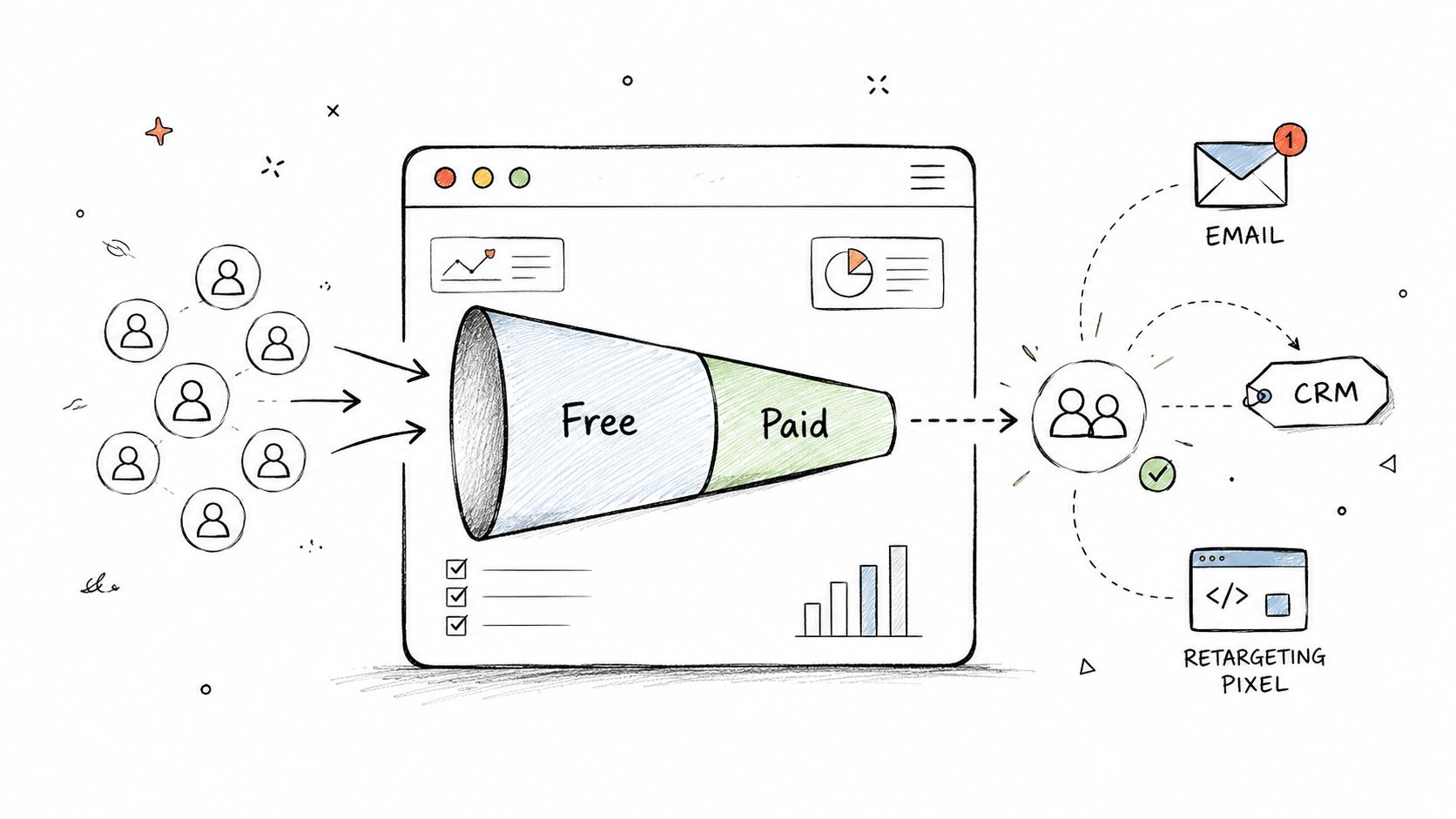
Slack, Calendly, Notion, and HubSpot all popularized a simple truth. Free access is only powerful when the product reveals value fast enough to create a natural upgrade path. Freemium without usage-based conversion logic becomes a crowded waiting room full of users who like you and never pay.
The strongest PLG setups treat in-app behavior as the top of the sales funnel. Inviting teammates, creating a workspace, connecting an integration, or hitting an admin-level feature are not just product events. They're buying signals.
Where PLG wins and where it lies
PLG works best when users can experience a meaningful outcome without talking to sales. Slack's free workspace, HubSpot's free CRM, and Calendly's self-serve scheduling all reduce friction before the monetization moment arrives.
It breaks when teams dump everyone into the same nurture path. A user who invited five teammates shouldn't get the same email as someone who bounced after signup. Segment by behavior, not just signup date.
Practical rule: Build lifecycle messaging around product milestones, not calendar milestones.
A workable playbook looks like this:
Track high-intent events: Send events like workspace creation, teammate invites, feature usage, and admin actions into GA4 and your CRM.
Trigger lifecycle nudges: If a user hits a meaningful adoption threshold, send contextual email or in-app prompts tied to the next logical upgrade step.
Align retargeting with product stage: Pricing-page visitors need different ads than users who are actively collaborating inside the product.
Separate self-serve from sales-assist paths: Some accounts need automation. Others need a rep the moment account complexity appears.
Among growth marketing examples, this one tempts founders because it feels efficient. It is, but only after the product, CRM, and paid audiences all speak the same language.
2. Multi-Touch Attribution & Budget Allocation Optimization
Gartner has reported that B2B buyers use multiple channels before they ever speak to sales. That is why last-click reporting keeps sending startup teams to the wrong budget decisions. It usually gives branded search too much credit, ignores the channel that created demand, and hides the touches that improved close rate later in the funnel.
The fix starts with infrastructure, not modeling.
Standardized UTMs, clean CRM stage definitions, and server-side tracking come first. If campaign names are inconsistent or lead-source rules change between systems, attribution reports will look polished and still point budget in the wrong direction. A practical guide to marketing data integration helps more at this stage than another dashboard layer.
Then build from simple to useful. Keep a last-click baseline for comparison. Add a position-based or time-decay view. Match both against pipeline creation, opportunity progression, and closed-won revenue from the CRM. Early-stage teams do not need a complicated model. They need a model they can audit.
One pattern shows up often in B2B SaaS accounts. LinkedIn generates expensive leads at the top of the funnel, search captures the hand-raisers later, and branded campaigns appear to be the hero because they sit nearest to conversion. Teams that cut LinkedIn on that view often see pipeline quality soften a quarter later. The trade-off is familiar. Efficiency looks better in-platform, while total pipeline gets worse.
A better operating rhythm looks like this:
Audit discrepancies every month: Compare GA4, ad platforms, and CRM opportunity counts by source and campaign.
Send qualified pipeline data back to ad platforms: MQLs are a weak optimization target if half never reach sales acceptance.
Test budget shifts in controlled windows: Move spend between channels for two to four weeks and watch pipeline, not just form fills.
Segment by deal motion: Self-serve, sales-led, and enterprise paths usually need different attribution rules and budget thresholds.
Review lag time by channel: Paid social often creates demand earlier than paid search. Evaluating both on the same short conversion window distorts performance.
This is one of the clearest growth marketing examples because it changes how money gets deployed, not just how reports look. Strong attribution work helps startups stop overfunding the channel that harvests demand and start funding the channel mix that creates revenue.
3. Content-Driven SEO with Paid Intent Capture (Content + SEM Integration)
Google processes billions of searches every day. Startups do not need to win all of that demand. They need to cover the right commercial queries before larger competitors price them out on paid search and outrank them on organic.
This channel mix works because SEO and SEM solve different timing problems. Search ads put you in the auction for high-intent terms immediately. Content earns that traffic more slowly, but it usually gets cheaper and more defensible over time. For an early-stage team, the trade-off is straightforward. Paid search buys speed. Content buys margin.
The mistake is treating them as separate programs with separate keyword sets, separate goals, and separate reporting. That usually produces waste. The paid team bids on demo terms. The content team publishes broad educational posts. Neither side can show how the work contributes to pipeline.
A better setup starts with one intent map.
Build content around commercial clusters such as alternatives, comparisons, integrations, templates, implementation questions, and role-specific use cases. Then run paid search on the same cluster while rankings are still weak. If a term converts but CPCs stay high, publish a page designed to rank for that exact query family. If a term gets traffic but weak conversion, keep it higher in the funnel and retarget visitors with a stronger next step.
A practical playbook looks like this:
Group keywords by buying stage: Separate problem-aware terms from vendor-aware and solution-aware terms before you write or launch campaigns.
Create paired assets: If you run ads for "CRM for small sales teams," build the organic page set around that same use case instead of a generic blog post.
Use paid search to validate content priorities: Queries that produce qualified demos often deserve dedicated landing pages, comparison content, and internal links.
Reduce spend selectively as pages rank: Keep paying for terms where ads still add incremental conversions. Pull back where organic coverage is already carrying the load.
Retarget by page intent: Someone who read an integration page should see a product proof offer, not a broad awareness ad.
Share search term data across teams: The paid search account often reveals objections and modifiers that content briefs miss.
This is one of the clearer growth marketing examples because the execution details are visible. Teams can see which keyword groups close, which pages assist pipeline, and where paid search is masking weak organic coverage.
For B2B startups, this model gets stronger when search is coordinated with audience targeting on other channels. A visitor who first discovers an integration page through Google may need several touches before they request a demo. That is where retargeting and account-aware distribution matter. Teams running paid social alongside search should align messaging and offer sequence across both. If you need a practical reference for that side of the mix, this guide to LinkedIn advertising for B2B teams covers the targeting and campaign structure well.
The operating rule is simple. Use paid search to learn where demand already exists. Use content to keep more of that demand without paying for every click forever.
4. Account-Based Marketing with LinkedIn Paid + CRM Orchestration
LinkedIn ads get expensive fast when the account list is weak. The channel works better when paid media, CRM data, and sales follow-up are all aimed at the same shortlist of companies.
That is the practical split between ABM that creates pipeline and ABM that creates activity. Teams that target broad job functions often buy a lot of clicks from people who will never enter a real deal cycle. Teams that start with closed-won patterns usually spend less waste and give sales a cleaner queue.
The useful question is not, "Can we personalize this campaign?" It is, "Which accounts deserve personalization in the first place?"
A startup-friendly ABM motion usually looks like this:
Build the account list from real revenue data: Pull common traits from customers that closed fast, expanded early, or had strong retention. Size, tech stack, sales model, and team maturity often matter more than industry alone.
Segment accounts by buying context: Enterprise prospects, mid-market teams replacing a competitor, and founder-led companies shopping for their first tool should not see the same message.
Use LinkedIn for account coverage, not just lead capture: Target named accounts and relevant roles so multiple stakeholders see consistent positioning before sales reaches out.
Pass engagement signals into the CRM: Ad clicks matter less than account-level behavior such as repeat site visits, pricing-page sessions, webinar attendance, and response to outbound.
Trigger sales plays by intent threshold: A single click rarely means much. Three engaged visits from two contacts at the same account usually does.
The CRM piece is where a lot of programs break. Marketing launches campaigns, sales works from a static target list, and nobody updates priorities when intent changes. A better setup pushes LinkedIn engagement, site activity, lifecycle stage, and owner status into one view so reps know which accounts are warming up and which ones are just burning impressions.
Creative strategy matters too. Generic B2B copy underperforms because ABM buyers expect relevance. An operations leader at a 200-person SaaS company needs different proof than a VP at a healthcare platform. Industry-specific landing pages, customer logos from the same segment, and CTAs matched to deal stage usually beat one universal demo page.
If your team is refining campaign structure and audience setup, this guide to LinkedIn advertising for B2B teams is a useful operational reference.
One trade-off is scale. Tight account lists improve fit, but they also cap reach and can push frequency too high. That is why strong ABM teams refresh account tiers often, suppress closed-lost segments for a period, and rotate offers before ad fatigue shows up in the CRM.
Broad targeting inflates lead volume. Account-aware targeting gives sales context they can actually use.
5. Viral Loops and Referral Programs with Email In-App Incentives
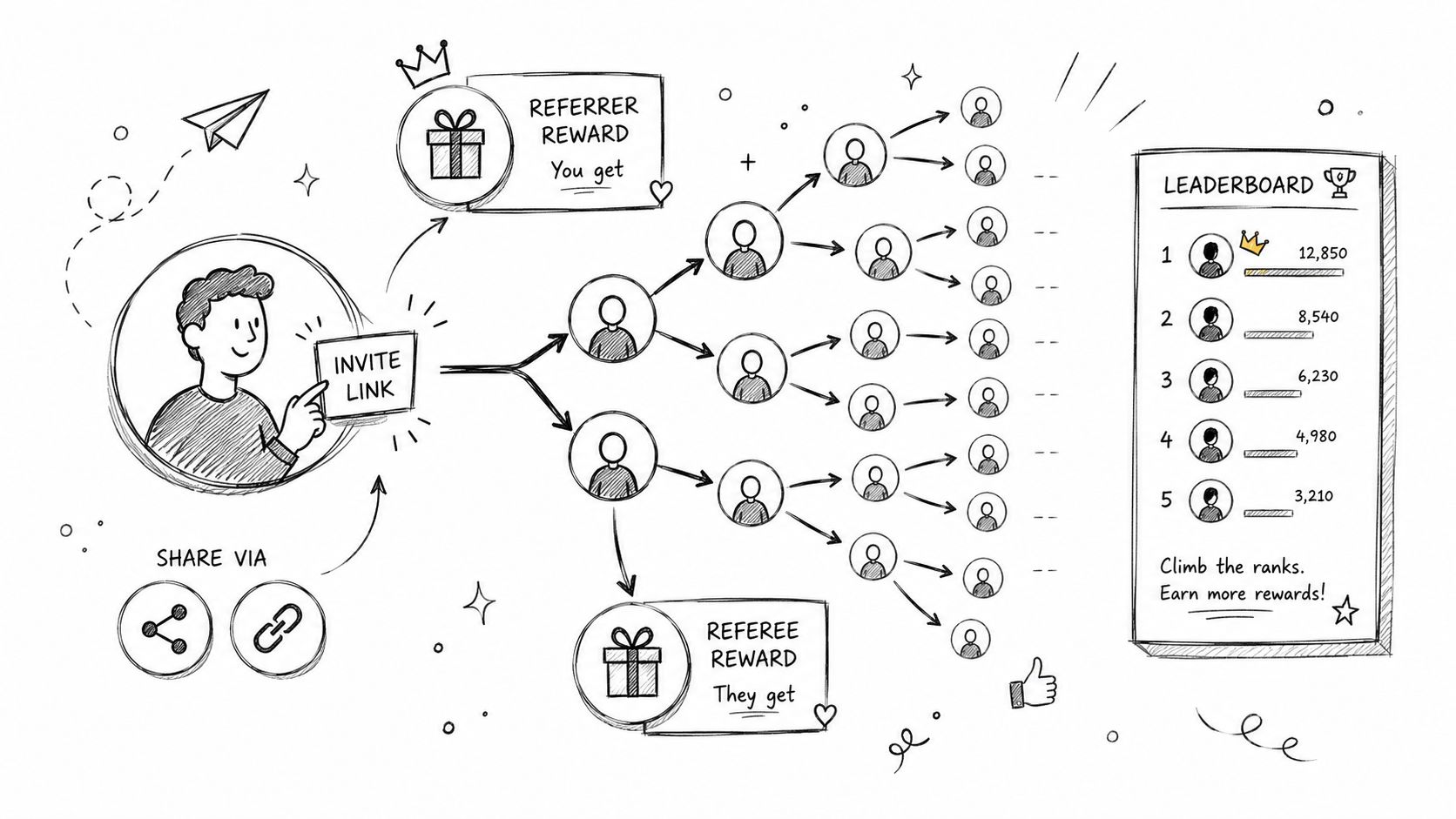
Dropbox made referral mechanics famous, but the broader lesson applies well beyond file storage. Users share products for one of two reasons. The product naturally requires collaboration, or the reward is good enough to justify the effort.
The strongest referral systems combine both. Slack's teammate invites are built into usage. Calendly links travel with every booking interaction. That's much stronger than bolting a generic “refer a friend” banner onto the dashboard and hoping for magic.
Designing the loop
Two-sided incentives usually outperform one-sided ones because both people feel the benefit. But incentives aren't the whole story. Timing matters more than is often accounted for.
Ask for referrals right after a user experiences a win, not three weeks later in a generic newsletter. If the product has a natural “aha” moment, that's where the prompt belongs.
A practical setup:
Trigger at peak satisfaction: After successful setup, project completion, booking, or a positive support interaction.
Coordinate email with in-app prompts: Repetition helps. Duplication annoys.
Track referral source in the CRM: If you can't connect referrals to activated or paying users, optimization gets fuzzy fast.
Watch for fraud: Self-referrals and reward gaming can distort the whole program.
This is one of those growth marketing examples that founders love because it feels almost free. It isn't. It costs product attention, reward economics, and support time. Still, when the product already contains social behavior, few channels compound faster.
6. Community-Driven Growth with User-Generated Content & Social Proof
Community-led growth is slower than paid acquisition and messier than SEO. It's also one of the few channels that can improve acquisition, retention, and product feedback at the same time.
Notion, Figma, HubSpot, and Zapier all benefited from users teaching other users. Templates, walkthroughs, integrations, forum answers, and public examples often do more selling than a polished campaign page.
Community is slow until it suddenly isn't
The trap is launching a community before there's a real reason to gather. A dead Slack group is worse than no Slack group. Start with the users already asking questions, sharing workflows, or helping peers.
Then give the space structure. Communities need rituals, prompts, moderation, and visible wins. Otherwise the loudest people shape the culture and everyone else lurks.
A practical community motion tends to include:
Seed with power users: Invite the people already using the product extensively.
Choose the platform for the audience: Discord works differently from Slack, Reddit, or LinkedIn groups.
Turn good user content into distribution: Testimonials, demo clips, tutorials, and templates can feed paid ads, landing pages, and email.
Close the loop with product: Community feedback loses value when nobody on the product side ever responds.
The best community content doesn't sound branded. It sounds useful.
This category of growth marketing examples is underrated because it rarely produces an instant dashboard spike. What it often produces is trust, lower resistance in the sales process, and a much healthier stream of proof than polished corporate copy.
7. Paid Retargeting Sequences with Dynamic Creative & Email Sync
Retargeting gets abused when marketers confuse persistence with persuasion. Showing the same ad to the same person over and over doesn't create intent. It creates wallpaper.
What converts is sequence. A visitor who read a feature page, then pricing, then an integration article has a story. Your ads should continue that story, not restart it every time.
Sequence beats repetition
Good retargeting mirrors buyer progression. The first touch might reinforce the problem. The second can introduce proof. The third can invite action. Email should either support that journey or stand down when the ads are doing the work.
Dynamic creative helps because it reflects what the user viewed. Product page visitors should see product-specific messaging. Blog readers need a softer bridge. Webinar attendees often respond better to case-study or demo follow-up than to direct “book now” creative.
A disciplined setup usually includes:
Behavior-based audiences: Pricing visitors, feature viewers, high-time-on-site readers, and webinar attendees should never sit in one bucket.
Frequency controls: Without caps, warm audiences burn out fast.
Stage exclusions: Exclude customers and active opportunities. Sales reps don't love competing with your ads.
CRM and email coordination: If a lead entered a live sales cadence, paid messaging should adapt or stop.
A lot of startups don't have a retargeting problem. They have a segmentation problem disguised as a retargeting problem.
8. Landing Page Optimization (A/B Testing & Conversion Rate Optimization)
Landing page work is where teams often waste time on decoration. They debate button colors while the headline is vague, the offer is weak, and the form asks for information nobody wants to give yet.
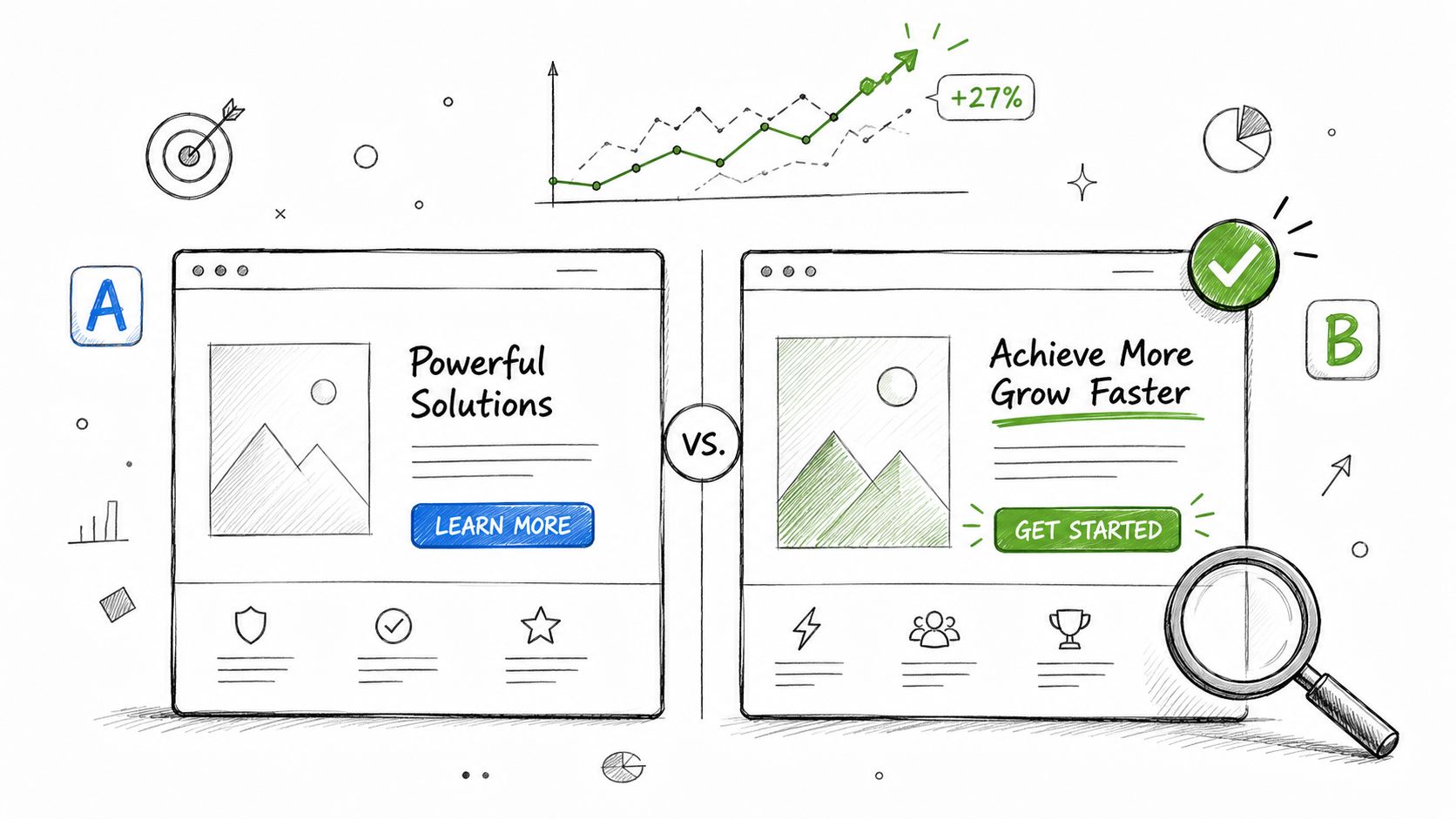
Real CRO starts with message clarity. If the visitor can't tell who the page is for, what problem it solves, and what happens next, no design tweak is going to rescue it.
What to test before the tiny stuff
Headlines, offer framing, proof placement, and form friction usually beat visual micro-edits. That's why the strongest experiments tend to challenge assumptions about buyer motivation, not just page aesthetics.
Run the instrumentation before the experiment. If CTA clicks, form starts, and submit events are misfiring in GA4, you'll end up “learning” from broken data.
A practical order of operations:
Test the promise first: The headline and subhead carry most of the conversion burden.
Reduce form drag where possible: Ask only what you need for the next step.
Match message to traffic source: Paid social, branded search, and comparison content shouldn't all land on identical pages.
Keep the variant clean: If you change five things at once, you won't know what mattered.
Among growth marketing examples, CRO is the least glamorous and one of the most profitable. It lifts the performance of traffic you already paid for and usually reveals whether your positioning is stronger than your media buying.
9. Email & CRM Lifecycle Automation
Lifecycle automation is where good growth systems start feeling unfair. While competitors keep blasting the same newsletter to everyone, your CRM can respond to actual behavior. Signup, activation, product usage, deal stage, inactivity, expansion interest. Each one can trigger a different path.
That said, automation has a dark side. It scales irrelevance fast when the logic is lazy.
Automation needs restraint
Map the buyer journey before building anything. Otherwise you end up with overlapping sequences, conflicting messages, and sales reps wondering why their prospect just received a beginner onboarding email after a discovery call.
A strong lifecycle setup usually relies on event-based triggers more than arbitrary delays. “Used feature X twice” is usually more meaningful than “has been in the database for seven days.” If you need a practical framework, this guide to a marketing automation workflow covers the operational side that many teams skip.
One broader operational reality matters here. Built In notes that many startup teams still face a single-operator scalability gap, while 73% of startups fail due to fragmented vendor coordination and slow execution cycles, according to its growth strategy article. That's exactly why lifecycle programs should be compact, legible, and tightly connected to CRM truth.
Use suppression rules: Keep active sales conversations out of generic nurture.
Segment by behavior and stage: New users, active evaluators, dormant leads, and customers need different messaging.
Protect deliverability: Low-engagement users shouldn't sit in the same cadence forever.
Good automation feels personal because the logic is disciplined, not because the copy says “Hi first name.”
10. Onboarding & Activation Optimization
A lot of acquisition problems are really activation problems wearing a fake mustache. You can keep pouring traffic into the funnel, but if users don't reach value quickly, the leak stays exactly where it was.
This is why onboarding deserves a place in any serious list of growth marketing examples. It sits at the boundary of product, lifecycle, and support. Get it right, and every acquisition channel improves.
A useful benchmark comes from B2B SaaS SEO work tied to revenue outcomes. Instatus saw a 1,500% increase in organic traffic and an 833% increase in monthly recurring revenue in a documented growth program, with the larger lesson being that teams should prioritize revenue attribution metrics like Net New ARR, CAC payback period, and LTV:CAC ratio over vanity metrics such as impressions and clicks, as detailed in this SaaS growth case study roundup. The activation takeaway is simple. Traffic matters less than whether users become customers and stay customers.
Here's a useful explainer on activation thinking in practice:
Activation is a product problem with a marketing wrapper
Define one or two activation events that correlate with long-term retention. For one product it might be “created project and invited teammates.” For another it might be “connected data source and viewed first report.”
Then strip friction around those moments.
Instrument each onboarding step: Funnel analysis should show exactly where users stall.
Use contextual in-app guidance: Don't hide the next step in a help center article.
Split onboarding by account type: Self-serve users need speed. Strategic accounts may need human help.
Judge changes by downstream quality: Faster completion doesn't matter if users activate shallowly and churn later.
What doesn't work is treating onboarding like a welcome tour. Real onboarding gets the user to a meaningful outcome.
10 Growth Marketing Strategies: Side-by-Side Comparison
Strategy | Implementation Complexity 🔄 | Resource & Tech Requirements ⚡ | Expected Outcomes ⭐📊 | Ideal Use Cases 💡 | Key Advantages ⭐ |
|---|---|---|---|---|---|
Product-Led Growth (PLG) with Freemium Conversion Funnels | 🔄 High, product engineering + lifecycle orchestration | ⚡ Medium–High, product instrumentation, CRM, retargeting, infra for free users | ⭐ Proven engagement → higher LTV over time; 📊 lower CAC long-term, slower revenue recognition | 💡 Self-serve SaaS with viral features and network effects | ⭐ Self-service conversions; built-in behavioral feedback |
Multi-Touch Attribution & Budget Allocation Optimization | 🔄 High, data engineering + statistical modeling | ⚡ High, server-side tracking, CRM sync, analytics & data science | ⭐📊 Improved ROAS and reduced wasted spend; enables confident budget shifts | 💡 Multi-channel paid programs where revenue attribution matters | ⭐ Reveals channel synergies; audit-ready attribution |
Content-Driven SEO with Paid Intent Capture | 🔄 Medium, content ops + SEO expertise; long runway | ⚡ Medium, content production, SEO tools, temporary paid SEM spend | ⭐📊 Compounding organic traffic; paid captures immediate intent; lowers paid spend over time | 💡 B2B SaaS, e-commerce, industries with search intent | ⭐ Sustainable organic growth and brand authority |
Account-Based Marketing (ABM) with LinkedIn Paid + CRM Orchestration | 🔄 High, account personalization + sales alignment | ⚡ High, LinkedIn spend, CRM hygiene, creative, sales resources | ⭐📊 Higher deal value and pipeline influence; longer sales cycles | 💡 Enterprise / mid-market B2B with high LTV accounts | ⭐ Personalized outreach; stronger Mktg–Sales alignment |
Viral Loops and Referral Programs with Email/In-App Incentives | 🔄 Medium, product hooks + fraud prevention | ⚡ Low–Medium, referral tracking, email, in-app prompts, retargeting | ⭐📊 Low CAC referrals; potential exponential user growth; dependent on PMF | 💡 Consumer apps, team-based SaaS, products with network effects | ⭐ High trust acquisition; increased LTV and advocacy |
Community-Driven Growth with UGC & Social Proof | 🔄 Medium–High, long-term community management | ⚡ Medium, community platform, manager, content ops, UGC incentives | ⭐📊 Lower CAC, improved retention and UGC-driven conversions over time | 💡 Developer/designer tools, niche B2B/SaaS targeting engaged communities | ⭐ Organic advocacy, product feedback, reduced support costs |
Paid Retargeting Sequences with Dynamic Creative & Email Sync | 🔄 Medium, sequencing, dynamic creative, CRM sync | ⚡ Medium, ad platforms, creative, tracking, email integration | ⭐📊 Fast conversion lifts from warm audiences; higher short-term ROAS | 💡 E‑commerce, pricing-page visitors, webinar attendees | ⭐ High conversion efficiency; quick test-and-learn cycles |
Landing Page Optimization (A/B Testing & CRO) | 🔄 Medium, experimentation rigor and analytics | ⚡ Low–Medium, A/B tools, dev time, analytics instrumentation | ⭐📊 Measurable conversion lifts; compounding ROAS improvements | 💡 Paid landing funnels, signup & demo pages, high-traffic CTAs | ⭐ Statistically validated improvements; better unit economics |
Email & CRM Lifecycle Automation | 🔄 Medium, workflow design + data hygiene | ⚡ Medium, CRM (HubSpot/Salesforce), event tracking, content | ⭐📊 Increased conversion velocity and clearer pipeline attribution | 💡 Trial nurture, retention programs, B2B lead qualification | ⭐ Personalization at scale; reduced manual outreach |
Onboarding & Activation Optimization | 🔄 Medium–High, product analytics + cross‑team execution | ⚡ Medium, in-app messaging, analytics, support resources | ⭐📊 Faster time-to-value, higher activation and retention rates | 💡 Trial-based SaaS, marketplaces, products with clear activation events | ⭐ Reduced early churn; measurable activation improvements |
Your Growth Playbook Starts Now
The strongest growth marketing examples all share the same boring secret. They're integrated. The flashy part might be a freemium loop, a clever LinkedIn audience, or a high-performing SEO cluster, but the result usually comes from coordination across channels, systems, and timing.
That's why copying tactics rarely works on its own. A referral loop won't save a weak onboarding flow. Retargeting won't fix a vague landing page. ABM won't rescue a CRM that can't tell sales-ready accounts from curious browsers. Each tactic has a job, and each one performs better when the handoff to the next stage is clean.
If you're deciding where to start, start with the bottleneck, not the trend. If acquisition is strong but trial users fade out, work on onboarding and lifecycle. If paid channels generate leads that never become revenue, fix attribution and CRM stages before buying more traffic. If you're dependent on paid spikes, build an SEO and content system that compounds over time. If your close rates are better on a narrow slice of accounts, lean into ABM instead of widening the top of funnel.
The trade-offs matter. PLG lowers friction but demands disciplined product instrumentation. SEO compounds but asks for patience and editorial consistency. ABM sharpens quality but narrows volume. Community builds trust but takes time to nurture. Retargeting captures warm demand but can waste budget when audience definitions are sloppy. CRO is efficient but only after your offer and messaging are clear enough to test meaningfully.
For early-stage teams, especially lean ones, the smartest move is usually to pick one primary growth engine and one supporting system. For example, content plus retargeting. PLG plus lifecycle automation. ABM plus CRM orchestration. Trying to run all ten motions at once usually creates fragmented execution, exactly the problem many startups are already fighting.
Use these examples as working models, not templates to copy line for line. Audit your tracking first. Decide what success means in revenue terms. Instrument the product and the funnel. Then run weekly experiments with a short feedback loop and enough discipline to stop doing what only looks busy.
Growth gets easier when the system tells the truth. Once that happens, budget allocation gets cleaner, creative decisions get faster, and the team stops arguing about opinions that good data can settle. That's when growth marketing stops feeling like chaos and starts looking like an operating system.
Du Marketing helps startups build that operating system. If you need one partner to plan, implement, and optimize paid media, SEO, lifecycle automation, landing pages, and attribution as a single connected growth system, Du Marketing is built for exactly that.